
What to Do in the First 24 Hours After Finding Out
If you're reading this because you just found out, I want to say the thing I wish someone had said to me first: I'm sorry. Whatever led you here, confirmation you were dreading, a piece of proof you can't unsee, a conversation that finally said out loud what you already suspected, this is real, and it's allowed to hurt exactly as much as it does right now.
I'm not going to tell you how to feel today. I'm going to tell you what I wish I'd known about the next 24 hours, because that stretch of time turned out to matter more than I expected.
Your Body Is in Shock, Even If Your Mind Feels Sharp
When the confirmation finally came for me, it didn't arrive the way I thought it would. I expected tears first. What I got instead was a strange, cold clarity, almost like watching myself from a few feet away. Shock does that. It can look like calm on the outside while everything underneath is in freefall.
This is a normal response to a real trauma, even though nothing about it feels normal while it's happening. Your nervous system is doing exactly what it's built to do when the ground disappears without warning.
Three Things I'd Ask You Not to Do Yet
Not because you'd be wrong to want to. Because the next few hours are not the time, and I say this from experience, having done at least one of these before I knew better.
Don't make any big decisions yet. Not about the relationship, not about where you'll sleep tonight, not about what you'll say to anyone. Decisions made in shock are rarely the same decisions you'd make once the initial wave has passed, and you deserve to choose from somewhere steadier than this.
Don't go looking for more. The pull to search through messages, call histories, social media, every possible thread that might confirm or deny what you already know, is enormous right now. I understand that pull completely. But more digging rarely brings peace in these first hours. It usually just adds more raw material to an already overwhelmed mind.
Don't tell everyone yet. Not because you should be ashamed, you have nothing to be ashamed of, but because managing other people's reactions on top of your own is a weight you don't need to carry today. Choose one or two people you trust completely, and let that be enough for now.
What Actually Helps in the First Few Hours
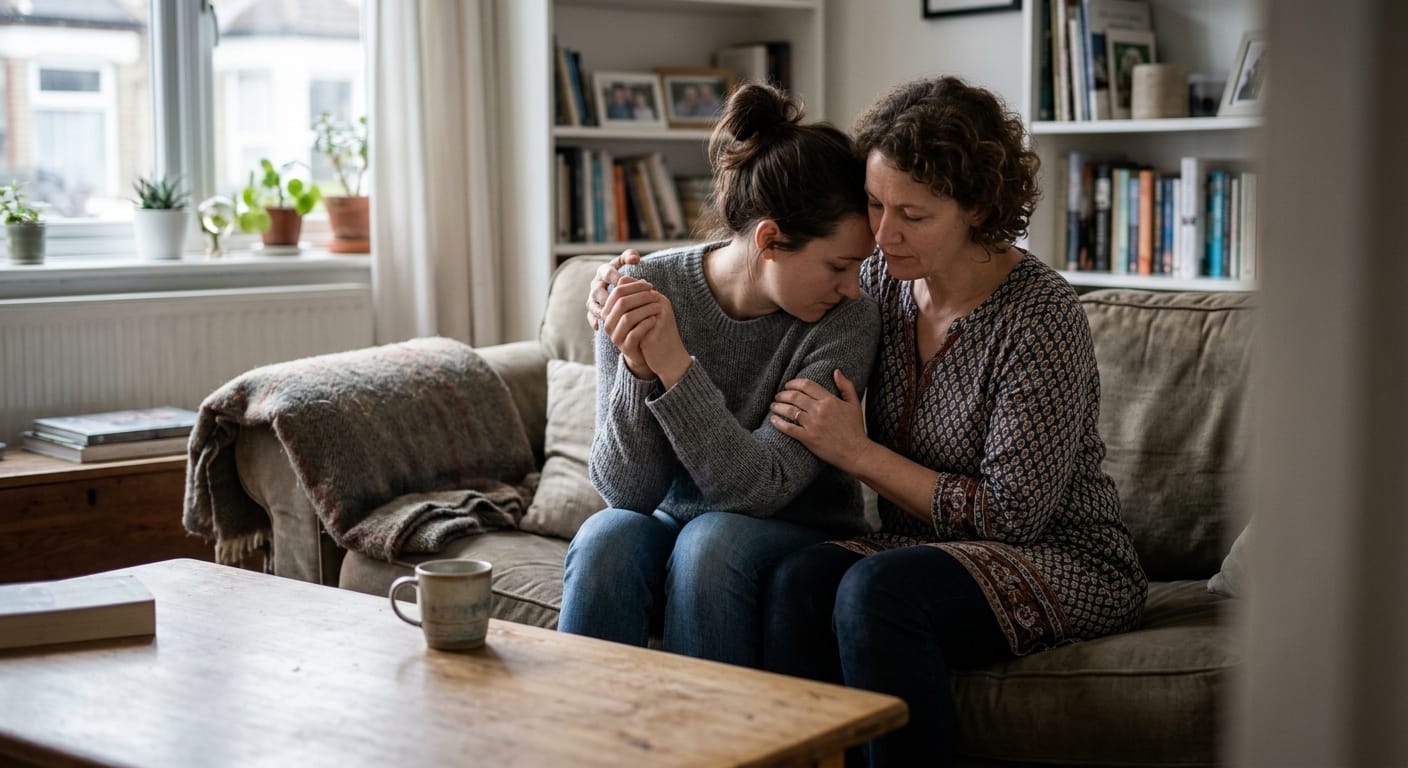
Find one person who can simply be with you, without needing you to explain everything or make sense of it yet. Not to fix it. Just to be there.
If you don't have someone within reach, write instead. It sounds small, but putting words on a page, even messy, unfinished ones, creates a small amount of distance between you and the flood, enough to breathe inside of.
If the anxiety becomes too much to sit with, try grounding yourself in your senses: five things you can see, four you can touch, three you can hear, two you can smell, one you can taste. It won't fix anything. It will bring you back into the room, which is sometimes exactly what the moment requires.
The Days After Today
I won't pretend today is the hardest day and tomorrow gets easier in a straight line. It doesn't usually work that way. Grief like this moves in waves, not stages you check off one by one. Some days will feel almost normal. Others will knock the air out of you over something small.
What I can tell you, from the other side of my own version of today, is that this feeling, exactly as sharp as it is right now, does not stay this sharp forever. It changes shape. It becomes something you can carry instead of something that carries you.
You Don't Have to Figure Out What Happens Next Today
Whether you stay, whether you go, whether you need more time before you even know which direction you're leaning, none of that has to be decided in the next 24 hours. Today's only job is getting through today.
I wrote about what came after, the shock, the grief, the slow work of deciding what I actually wanted instead of what I was afraid of, in The Voice You Can't Ignore. It's not a guide for today. It's for whenever you're ready for the next part.
See the full book: → The Voice You Can't Ignore

Marta Romero
I'm American, I've lived most of my life on the East Coast, and I still believe in writing things down by hand when a thought won't leave me alone. I wrote The Voice You Can't Ignore under a pen name, not to hide, but to protect the people who are still part of my life and didn't ask to be part of this story too.
If This Helped, There's More
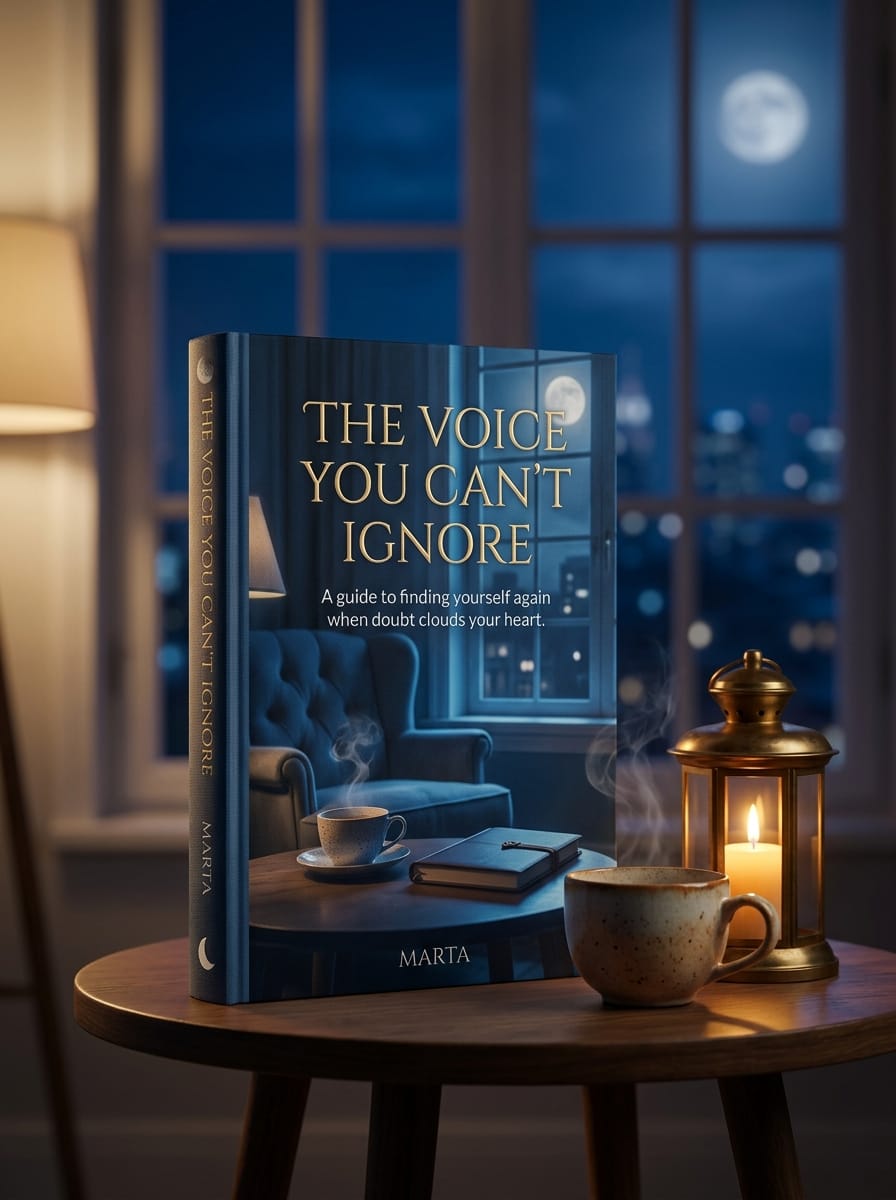
This article is one piece of a bigger picture. The full book walks through all of it, along with the journal I used to stay honest with myself along the way.
Get New Chapters and Reflections
By subscribing, you agree to receive occasional emails from Marta Romero. You can unsubscribe at any time. See our [Privacy Policy].

Books and resources for women navigating relationship doubt, written from lived experience, not clinical distance.
Disclaimer
Newsletter
Get new chapters, reflections, and the occasional honest thought, straight to your inbox.
By subscribing, you agree to receive occasional emails from Marta Romero. You can unsubscribe at any time. See our Privacy Policy
By Marta Romero